How to Check a Car’s Mileage and Spot a Clocked Car
To check a car’s mileage, enter its registration into GOV.UK’s free MOT history, which lists the odometer reading at every test since 2005. Mileage should climb steadily year on year – so any unexplained drop, long flat spell, or sudden jump is a red flag that warrants a paid history check and a close physical inspection.
Imagine the advert says 38,000 miles. The pedal rubbers are worn smooth, the steering wheel is shiny, and the driver’s seat bolsters is sagging like it’s done twice that figure. Cars don’t lie, even when an altered dashboard tries to.
In a September 2026 survey of 310 UK used-car dealers, six in ten said clocking has become more common over the past five years, and dealers estimated that 14% of the used cars they see may have been altered.1
In this guide, we’ll show you how to read a mileage trail, which patterns are suspicious and which have innocent explanations, what to check on cars under three years old, and what to do if you think a car has been clocked.
Table of Contents
Key Take aways
- The free GOV.UK MOT history shows the mileage at each test, and is the best first check.2
- Mileage should rise at a fairly steady pace. A drop is the clearest warning.
- A drop isn’t always fraud. Typing slips, miles and kilometres, and replaced dashboards can all cause one, so ask for evidence.
- A car under three years old has no MOT trail, so you’ll need a paid check or its service records.
- Compare the numbers with the car’s wear, and with the service history.
- If it doesn’t add up, walk away.
How to check a car’s mileage for free
- Go to GOV.UK’s MOT history service and enter the registration.
- The first MOT is done at three years in the UK so ask whether a car has had a plate change so you can check the old registration’s MOT history too, because the readings can be split across plates
- Write down the mileage at each test, with the date. GOV.UK shows results for cars tested since 2005.
- Check the pass and fail results too, because a fail followed by a pass on the same day carries its own reading.
- Compare the latest reading with the dashboard.
You need nothing from the seller, and it takes about two minutes. Do it before you travel. Our viewing checklist has the full list.
How to read the mileage trail
Here’s an illustrative example:
| MOT date | Mileage | What it tells you |
|---|---|---|
| Mar 2023 | 21,400 | The starting point |
| Mar 2024 | 28,900 | Up 7,500 in a year: normal |
| Mar 2025 | 36,200 | Up 7,300: steady |
| Mar 2026 | 29,800 | Down 6,400. A clocked car, a typo or a replaced dashboard. Ask why |
A typical car covers roughly 7,000 miles a year, though that varies a lot. What matters is the pattern, not one number. These patterns deserve a question:
| Pattern | What it might mean | What to do |
|---|---|---|
| A gap of more than a year between tests | Clocking, a typing slip, or a replaced instrument cluster | Ask for evidence, and walk away without a clear answer |
| Flat for years | A car barely used, or a reading wound back before a test | Check the wear and service history |
| A huge jump | A change of use, such as a company car or a taxi | Ask what it was used for |
| A sudden switch in units | An import recorded in kilometres | Ask for the import paperwork |
| One odd digit | A typing error at a test | See below |
Is a drop always clocking?
No. A drop can come from a typing slip at the test centre, a mix of miles and kilometres, or a legitimately replaced dashboard. A large industry study found 6.3% of 4 million vehicles had a recorded mileage discrepancy, and that figure covered drops between tests and mixed miles and kilometres. It’s a reason to check, not proof.
If a reading looks like a typing mistake, GOV.UK has a process for getting an MOT record corrected through a form on thier website. Ask the seller to show you the evidence. If they can’t, treat the car as clocked.3
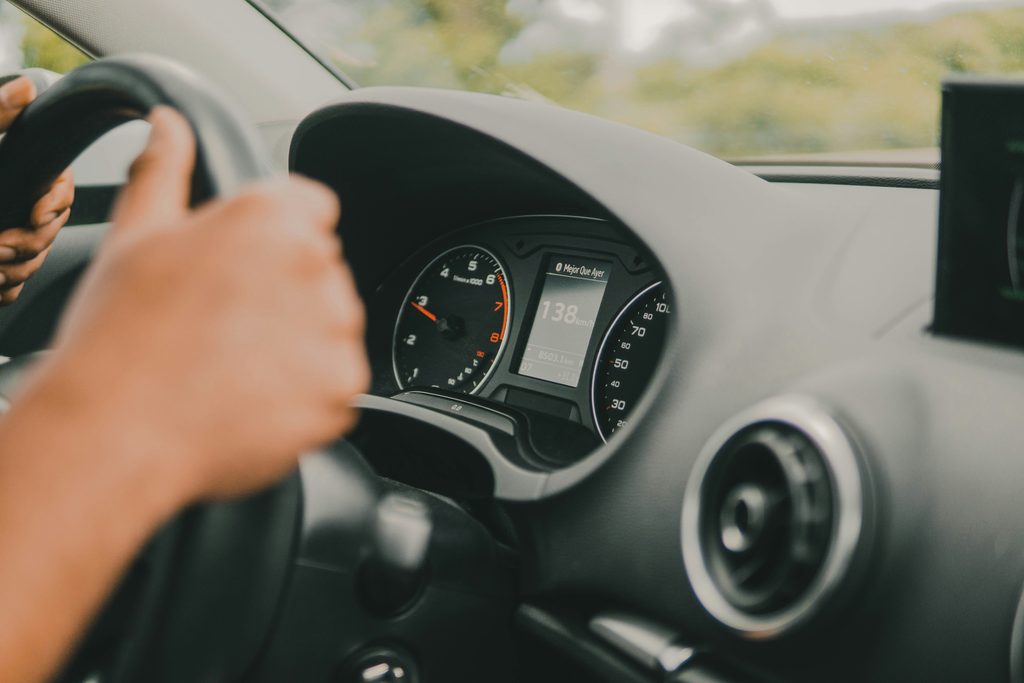
Check the paperwork against the trail
Lay the MOT readings beside the mileage on service invoices, old MOT certificates and the advert. They should fit together, with each reading higher than the one before. Our service history guide shows how to build the timeline.
Has the dashboard been replaced?
A replaced instrument cluster is the one legitimate reason for a mismatch, if it’s documented. Ask directly, and ask for the invoice showing the date, mileage and who did the work. Look for a note in the service book or MOT history, and for signs the dashboard was removed, such as scratched trim or mismatched screws. A seller with no paperwork is giving you a reason to distrust the mileage.
Check the car itself
Wear is hard to fake all at once. A car at 35,000 miles should look almost new inside. Compare the claimed mileage with:
- Pedal rubbers. Worn through is a warning.
- Driver’s seat bolster. Is it sagging or shiny?
- Steering wheel and gear knob. Is the finish polished or peeling?
- Carpets, key and buttons. Faded or worn buttons suggest more use than the dashboard says.
If the wear shows far more use than the clock does, trust the wear.
Cars under three years old
A new car has no MOT until its third anniversary, so it has no MOT trail. For these, rely on a paid history check, the manufacturer’s or dealer’s service records and the first MOT date. The risk is lower, but the checks matter more because there’s less data.
When a paid check helps
The free MOT data records a reading once a year while a paid history check adds readings from other sources, such as insurers, finance companies, trade auctions and an industry mileage register.
This helps to fill the gaps between tests and also gives you an updated clue as to what to look out for during your checks. Most paid check usually costs between £10 to £20 to run a detailed breakdown on all you need to know about the car you intend buying – a small price to pay to avoid losing thousands on a clocked car.”
Run it on the registration, and see our stolen car guide for what a full check covers.
Re-check millage again at handover:
some clockers wind the mileage back for the viewing and test drive, then forward again before collection. Compare the dashboard with the advert, the test drive and the day you collect, and photograph it each time.
Previous adverts and salvage auction records can carry mileage readings. If an old advert shows more miles than the dashboard does now, ask why.
An extra clue: the diagnostic scan
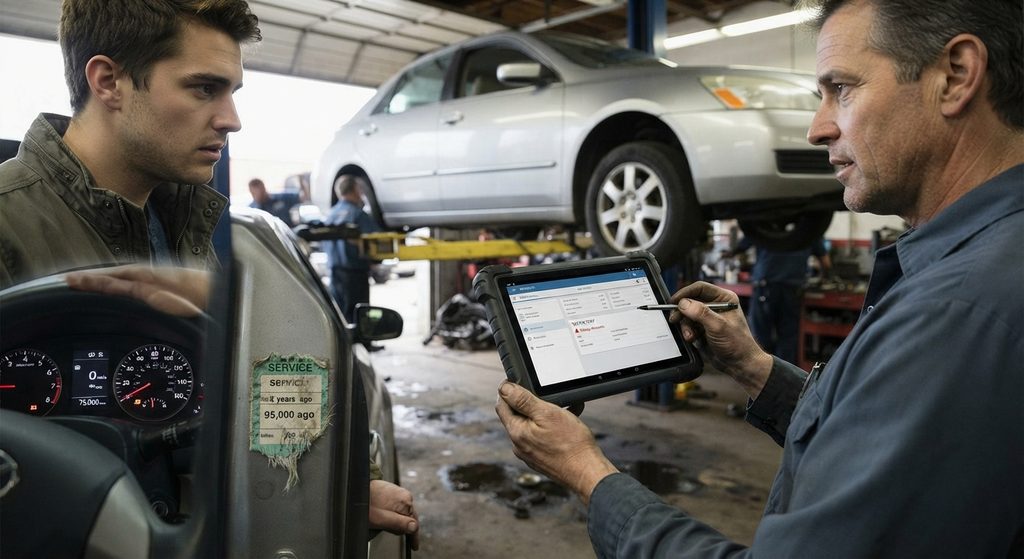
A modern car stores its mileage in several control units, not only in the dashboard. Unless every one has been altered, they can sometimes disagree.
A scan that reads multiple modules can also show you a mismatch. Treat it as a clue, not proof, because not all cars and tools show it.
Is clocking illegal?
Deliberately altering the mileage isn’t a specific criminal offence in the UK yet , even though many dealers are strongly campaigning for one. But selling a car with false mileage as genuine can still be prosecuted under fraud and consumer protection laws, and Trading Standards will also investigate it.
What to do if you suspect a car is clocked
- Walk away. Don’t accuse the seller, and don’t pay a deposit.
- Keep the evidence: the advert, your messages, and a screenshot of the MOT history showing the discrepancy.
- If it’s a dealer, tell Trading Standards through the Citizens Advice consumer helpline on 0808 223 1133.
- If it’s a private seller, report it to Report Fraud. See our car scams guide for steps on how to do this.
Red flags: walk away if…
- The MOT history shows a drop with no explanation
- The odometer reads lower than the latest MOT reading
- The wear is far heavier than the mileage suggests
- The Pedals, seats, and switchgear look heavily used despite low claimed miles.
- The seller rushes the viewing, dodges questions, refueses a scan or becomes defensive when you check
- The price is too good for the mileage
- an undocumented dashboard swap.
- a mileage that differs at handover.
What to do if you’ve bought a clocked car:
- Dealer: under the Consumer Rights Act 2015, you have a 30-day short-term right to reject for a refund. After that, the dealer usually gets one chance to repair or replace.
- Private seller: the car must match its description under section 13 of the Sale of Goods Act 1979, and the Misrepresentation Act 1967 may apply.
- Steps: gather evidence, write to the seller, call the Citizens Advice consumer helpline (0808 223 1133), report to Report Fraud, and tell your finance provider if the car was on finance.
- Small claims: the limit in England and Wales is £10,000.
- If you’re the seller, once you suspect the mileage is false, say so.
Note: This Is just to keep you informed and not a legal advice.