

How to Check How Many Owners a Car Has Had (and Who Owns It)
You can’t find out who owns a car from its number plate, but you can find out how many keepers it’s had. A paid history check shows the count, and so does the V5C. DVLA only shares another keeper’s details for a “reasonable cause”, such as an accident, and buying a car isn’t one of GOV.UK’s examples1. The questions that matter are whether the seller is the real keeper and whether finance is owed.
The advert says “one careful owner”. The seller says they’ve had it for years. Both are claims, and records can test them in minutes. The seller’s say-so can’t.
In this guide, you’ll learn how to check keeper count, tell whether the seller is the real keeper, spot finance and scam warning signs, and decide how many owners is too many.
Table of Contents
Key Takeways
- A number plate lookup won’t show you an owner’s name or address.
- “Previous owners” in an advert really means previous registered keepers.
- The V5C shows a count of former keepers, not who they were. A paid history check gives you an independent count.
- The V5C isn’t proof of ownership, and a finance company can own a car someone else keeps.
- Match the seller’s photo ID to the V5C, and meet at the address on it.
- A pattern of quick turnover, or a story that doesn’t fit the dates, matters more than the raw number.
Can you find out who owns a car from its number plate?
No. The free DVLA vehicle enquiry shows facts about the car, such as tax, MOT and when its V5C was last issued. It doesn’t show who keeps it.2
To get another keeper’s name and address, you need a “reasonable cause” and a postal application on form V888. GOV.UK’s examples are all incidents: working out who was responsible for an accident, tracing the keeper of an abandoned vehicle or one parked on private land, or tracing people suspected of insurance fraud. Checking out a car you’re thinking of buying isn’t on that list.
Keeper or owner: the difference that trips people up
Think of a rented flat. The tenant gets the post, pays the bills and answers to the council. The landlord owns the place. A car works the same way. The registered keeper is the person DVLA records as responsible for it, including tax, insurance and fines. The owner is who it actually belongs to, and that can be someone else.3
Finance is the common case. Until the last payment, the finance company is the landlord, even though the person driving is named as keeper on the V5C. That’s why the front of the V5C says it isn’t proof of ownership, and why a clean-looking logbook doesn’t settle the question.
What “previous owners” really counts
When an advert says “two previous owners”, it almost always means two previous registered keepers. That makes the number a good guide and not a perfect one. Typically:
| Situation | Adds a keeper? |
|---|---|
| Private sale to a private buyer | Yes |
| Part-exchange to a dealer | Usually not, as the dealer isn’t normally registered as keeper |
| Dealer or manufacturer pre-registration | Yes |
| Handover within a family | Yes |
| Company car passed between drivers | Usually not, as the company stays the keeper |
So a car that’s sat on three forecourts can look cleaner on paper than it really is, and a “one keeper” ex-rental car may have had hundreds of drivers.
How to check how many owners a car has had
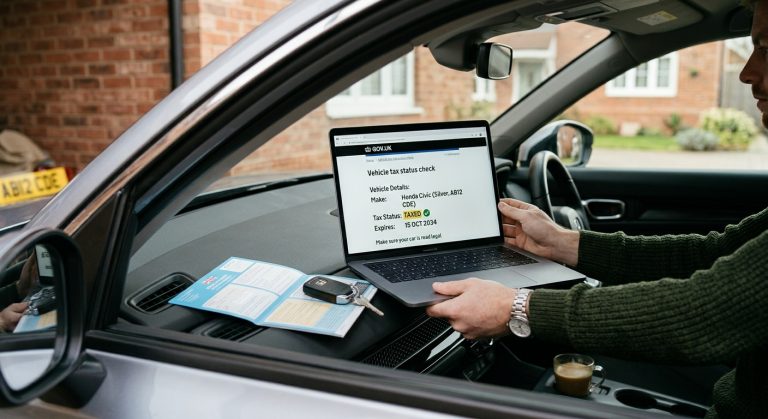
- Use the free DVLA vehicle check. It shows when the V5C was last issued. A replacement logbook or a change of address also updates that date, so treat it as a test of the seller’s story, not proof of a sale.
- Look at the V5C. It will always show the number of former keepers and when the current keeper acquired the car, but not their names or dates. Layouts vary, so read your document.
- Run a paid history check on the registration. It gives an independent keeper count, alongside stolen, finance, mileage and write-off checks. Check the write-off category status too: see Cat N car meaning for how to do that. Again! run your own, and never rely on what the seller sends4.
- Ask the seller in writing how long they’ve had the car, who they bought it from and why the previous keeper sold. Ask for a photo of the V5C section.
- Lay the MOT history beside the keeper dates. Mileage should rise steadily.5
How many owners is too many?
There’s no official number. Carwow says one is ideal but gives no fixed limit. AA calls several keepers in a short time a major red flag. A useful rule of thumb is to compare the count with the car’s age. Five keepers on a ten-year-old car is ordinary. Five on a three-year-old means a new keeper every seven months or so, and that deserves an explanation. The reasons matter more than the number.
Patterns that should make you pause
- Several keepers in quick succession. It can mean a fault nobody could fix, a car passed around the motor trade, or time with salvage or insurance companies.
- A seller who’s had it only a few weeks. There may be a good reason. Ask for it.
- Keeper changes that don’t fit the MOT and mileage story. Mileage that stalls or drops at a change is a classic sign of clocking.
- Plate changes. Often a harmless cherished plate, but ask, and use a history check that shows earlier registrations.
- A “one keeper” car that was a company, rental or taxi. One keeper doesn’t mean one careful driver.

How to check the seller is the real keeper
Do this before you hand over any money:
- Ask to see the V5C before you travel.
- Check the name and address on it match the seller’s photo ID.
- Meet at the address on the V5C. A seller who wants to meet in a car park or “round the corner” is a red flag.
- Check the VIN and engine number on the car match the V5C.
- Check the V5C looks genuine. GOV.UK’s official step by step checks when buying a used car describes the DVL watermark and publishes serial number ranges from stolen blank log books.
- Check the date on the V5C against the history report and the DVLA check.
Afterwards, make sure you get the green “new keeper” slip, and that the seller tells DVLA about the sale. 6
Could the car still be on finance?
Yes, and a clean-looking V5C won’t show it. Run a paid history check before you pay. GOV.UK’s consumer guide says it will show outstanding finance, and whether the car has been stolen or written off.
If finance is still owed, the lender may still have a claim on the car. The law here has nuances, so check with Citizens Advice or the lender before you go ahead, not after. Ask for a receipt that includes the seller’s name and address, the car’s registration and details, the price and the date.
The same report shows whether the car has been written off. If it has, our guide to Cat N cars explains what that means.
The seller who’s “just helping a friend”
Here’s how it can go. You find a great deal. The seller says it belongs to their cousin, who’s abroad, and they’re “just helping”. The price is firm and a deposit would “hold it”.
Even if the story is true, you can’t tell who has the right to sell. If it’s a lie, you could lose the money and never see the car. Walk away, unless the registered keeper deals with you directly and can prove it’s theirs. Never send a deposit or payment to a third party before you’ve seen the car and the V5C.
No V5C? Treat it as a stop sign
GOV.UK says DVLA advises you not to buy a vehicle without one, because it’s the one document that lets you check the seller. The seller should apply for a replacement first, and you shouldn’t pay a deposit before you’ve seen it.
Can you contact a previous owner?
DVLA won’t pass previous keepers’ names to ordinary buyers. But names sometimes appear in service books and invoices that come with the car. If you find one, write politely and ask specific questions: how long they owned it, whether it was serviced regularly, and whether there were recurring faults. Not everyone will reply, and their privacy should be respected. A garage that stamped the service book may also share what work it did.
Using the keeper count when you negotiate
Frame it as risk, not criticism. Try: “The car has had five keepers in six years, and the similar ones I’ve looked at have had two or three. That makes it harder to resell, so I’d want the price to reflect it.” Be ready to walk away. A discount doesn’t fix a pattern you can’t explain.
Red flags: walk away if…
- the seller won’t show the V5C, or there isn’t one
- the name or address on it doesn’t match their photo ID
- they won’t meet at the address on the V5C
- they’re “selling for someone else”
- the history report shows finance, or dates that don’t match their story
- they ask for a deposit or payment to a third party before you’ve seen the car
FAQs
Sources
- GOV.UK request page: https://www.gov.uk/request-information-from-dvla/request-information-about-another-vehicle-registered-keeper ↩︎
- GOV.UK Get vehicle information: https://www.gov.uk/get-vehicle-information-from-dvla ↩︎
- Auto Express: https://www.autoexpress.co.uk/sell-my-car/guides/what-is-a-v5c ↩︎
- GOV.UK consumer guide: https://www.gov.uk/government/publications/buying-repaired-written-off-vehicles-a-consumer-guide/buying-repaired-written-off-vehicles-a-consumer-guide ↩︎
- GOV.UK Check MOT History: https://www.gov.uk/check-mot-history ↩︎
- GOV.UK: https://www.gov.uk/sold-bought-vehicle ↩︎



6 Comments