Cat N Car Meaning: What It Is and Should You Buy One?
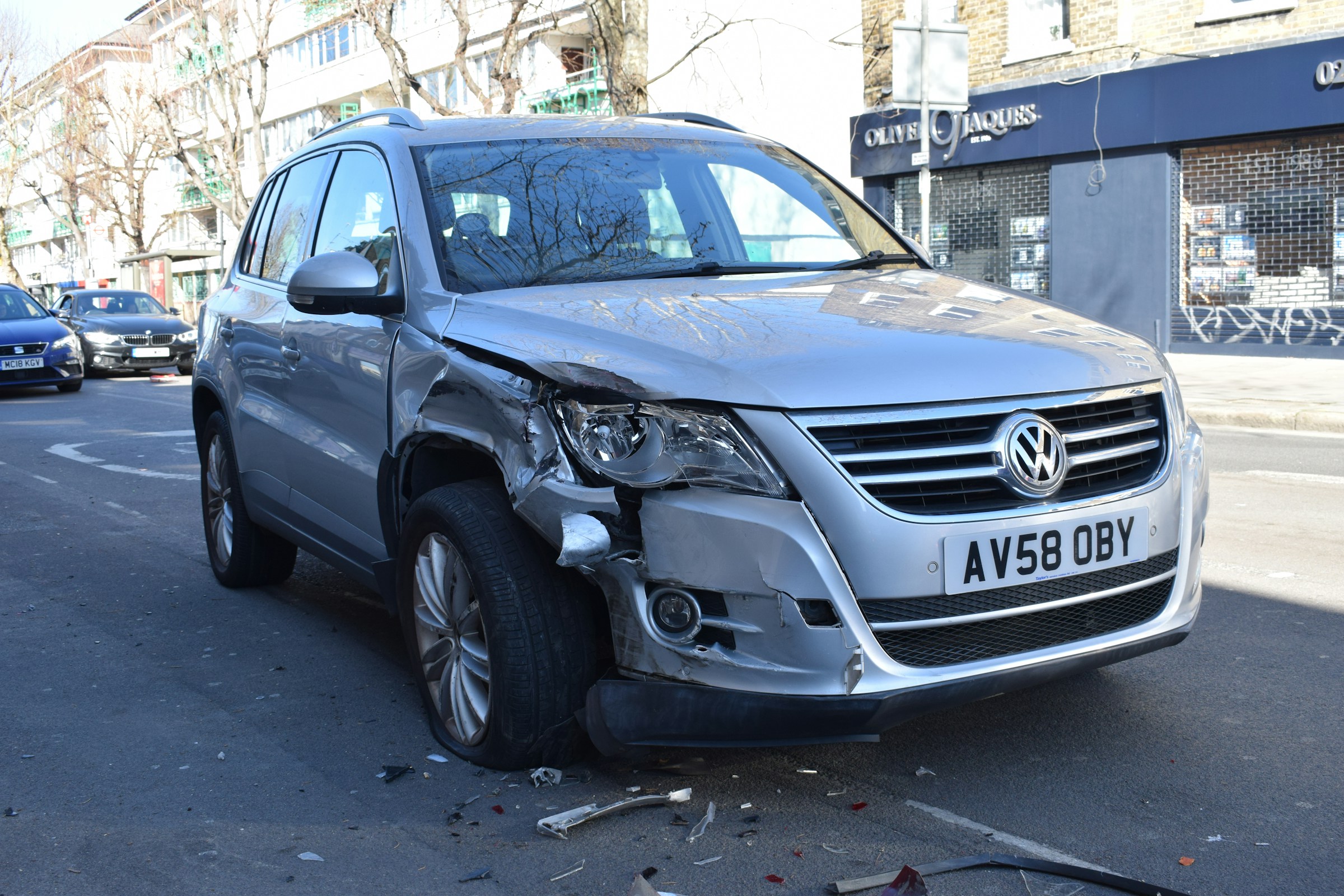
A Cat N car is one an insurer decided not to repair after non-structural damage, usually because the repair cost more than the car was worth. The “N” stands for non-structural. A Cat N car can be repaired and driven legally, but the write-off stays on its records, and not every insurer will cover it. Whether one is a bargain or a risk depends on how well it was repaired, so the checks below matter more than the label
So, you’ve finally found the one. Right age, low mileage, and £3,000 cheaper than everything else you’ve looked at. Then you notice two small words in the advert: “Cat N”. Your stomach dips a little, and then you whisper silently to yourself, what does this really mean and how does that affect my deceision?
Find out how it happens, how it affects insurance and if buying one makes sense.
Table of Contents
Key takeaways
- Cat N means the car was repairable and its frame and chassis weren’t damaged.
- “Non-structural” doesn’t mean minor. The industry’s own code says safety-critical parts may still have needed replacing.
- Don’t trust a clean logbook. Cat N doesn’t add a note to it, so you need a paid history check.
- Ask for repair proof and pay for an independent inspection before you hand over money.
- Tell your insurer, and get a quote before you commit.
- GOV.UK says a properly repaired write-off can be good value, as long as you go in with your eyes open.
What does Cat N mean on a car?
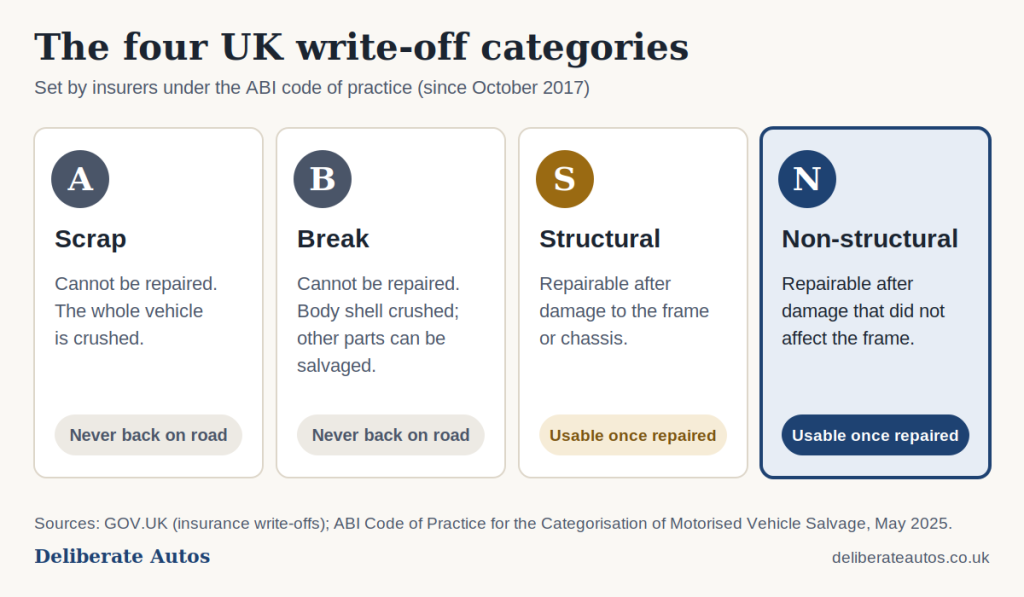
When an insurer decides a damaged car isn’t worth repairing, it gets a write-off category. There are four, set out in the Association of British Insurers’ (ABI) code. The system started in October 2017, and Cat N took over from the old Cat D1.
In plain terms: A and B never go back on the road. S and N can, once they’ve been repaired. The difference between S and N is where the damage was.
What counts as non-structural damage?
Here’s the bit that surprises people. “Non-structural” doesn’t mean “minor”. It means the parts that hold the car together, its frame and chassis, came through intact.
The ABI’s code spells it out. Its non-structural examples include bumpers, the bonnet, wings, door skins, rear quarter panels, the roof panel, the boot floor and the boot lid. Structural examples, which put a car in Cat S, include the A and B pillars, the sill and bulkhead reinforcements and the chassis legs.
It also warns that a Cat N car may still need safety-critical parts replaced. That’s the line to remember when you’re looking at a cheap price.
Why do cars get written off at all? Because repairs cost more than they used to. What Car? says a small shunt that once cost a few hundred pounds can now top £1,000 once the sensors and driver-assistance systems are recalibrated. So a car doesn’t need to be badly smashed to be uneconomic to repair, especially an older, lower-value one. And the category isn’t a claims handler’s guess. It’s decided by a qualified assessor.
Is a Cat N car safe to drive?
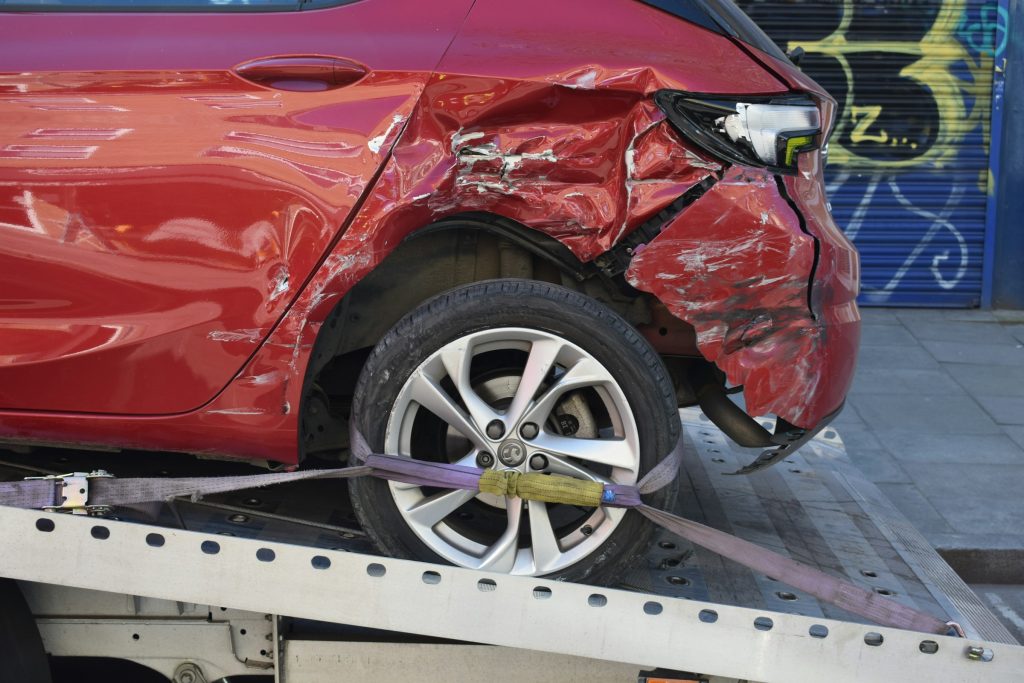
It can be, if it was repaired properly. The label tells you the frame wasn’t damaged. It doesn’t tell you how big the job was, or whether every safety system was put right.
An MOT won’t settle it either. It’s a roadworthiness check on the day, not a grade for the repair, so a pass isn’t proof the work was good.
How can you check if a car is Cat N?
Here’s the part that catches people out: the logbook won’t tell you. GOV.UK says a Cat N keeper can keep the existing V5C, and the ABI flowchart shows no note is added. So a clean V5C proves nothing.2 To see who the registered keeper is and how many keepers there have been, see how to check who owns a car
What will tell you:
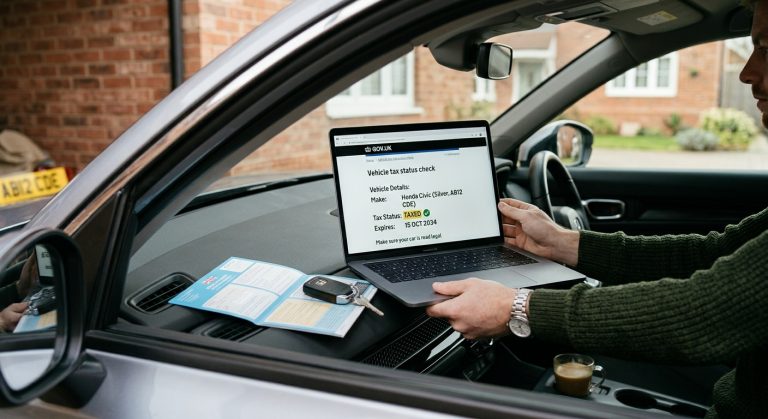
- A paid history check on the registration. GOV.UK says it will show if a car has been stolen, has outstanding finance, has a mileage discrepancy, or was previously written off. Run your own. Don’t rely on a report the seller sends.
- A VIN match. Check the VIN on the car against the V5C and the report, and check the V5C details against the DVLA’s free vehicle enquiry service.
- The free MOT history on GOV.UK if the car is over 3 years old, plus a check for outstanding recalls.
- And if the seller knows the category, it should be in the advert. If it isn’t, that’s worth noticing.
What should you ask the seller?
A good seller won’t mind questions. A nervous one will.
Endeavour to Ask:
- When was it written off, and what caused the damage: a collision, flood, fire or theft? Water and fire damage that stayed out of the structure can also be Cat N.
- Who handled the car between the write-off and the repair?
- Who repaired it, and can I see invoices, parts receipts and before-and-after photos?
- Were the airbags and seat belts replaced with new parts? The ABI code says these must never be re-sold or re-used from salvage, so ask for the receipt.
- Were the sensors and cameras recalibrated?
- If it’s a hybrid or electric car: was the high-voltage battery checked, and by whom? The code says a Cat N car’s high-voltage systems may still be compromised.
- Will you let me get it inspected independently?
How to inspect a repaired Cat N car
Go in daylight and take your time to:
- Look for uneven panel gaps, mismatched paint and overspray on rubber seals.
- Check the dashboard warning lights, especially the airbag light, behave normally.
- Test every electrical function.
- Look underneath for fresh patches of underseal or repair welds, and check the tyre wear for alignment problems.
- On the test drive, check it brakes and steers straight and listen for odd noises.
- Pay for an independent inspection. GOV.UK recommends an independent expert or engineer, and What Car? puts these from around £200. It may also catch faults that have nothing to do with the accident.
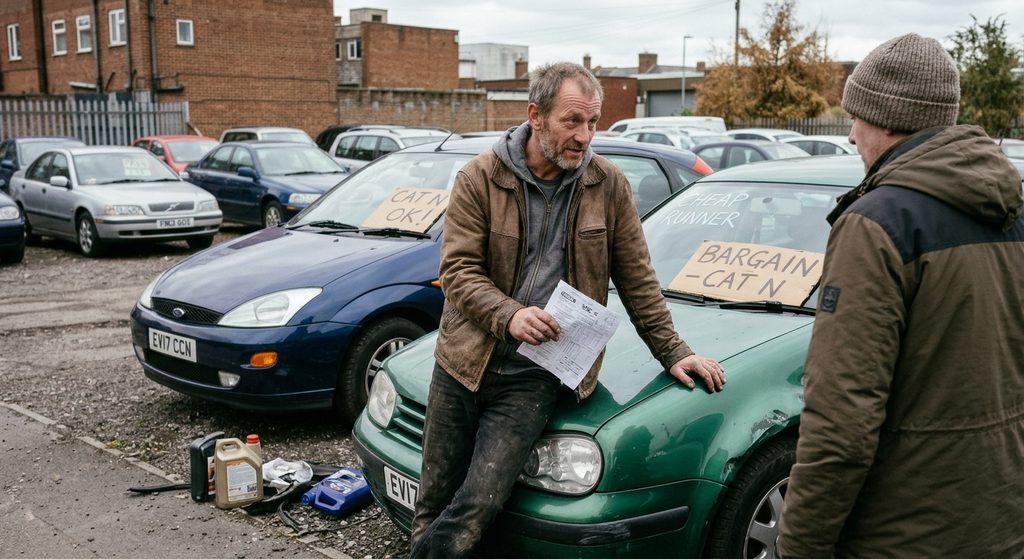
Red flags: walk away if…
Sometimes the car is fine and the seller isn’t.
Walk away if:
- they won’t tell you the category or won’t let you run a history check
- there are no invoices or photos, or the answers are vague (“just a scratch”)
- they refuse an independent inspection
- the price is close to a clean car’s price
- the VIN doesn’t match the V5C
- they ask for a deposit before you’ve seen the car
Does Cat N affect insurance?
Tell your insurer before you buy. GOV.UK says insurance can cost more for a written-off car, not every insurer will automatically cover one, and failing to disclose it can get a claim rejected. Get a quote first, so the “bargain” doesn’t vanish into the premium.
Does Cat N affect value and resale?
You’ll usually pay less now and get less later. The write-off stays on the car’s record, so many buyers will want a discount or won’t touch it.
There’s no reliable fixed discount, so compare similar clean cars and ask why the gap is the size it is. GOV.UK’s warning about Cat S cars applies here too: if the price looks too good to be true, be careful..
Is a Cat N car worth buying?
Picture two buyers looking at the same car for example,
The first plans to keep it for eight years. She has the repair invoices, an independent inspection report and an insurance quote that barely moved. For her, the lower price may be exactly right.
The second plans to sell in two years. When he does, he’ll find many buyers won’t touch a Cat N car, and the ones who will want a discount. His saving on the way in could disappear on the way out.
GOV.UK itself says there’s nothing wrong with buying a write-off that’s been returned to good condition, and that it can be good value if you make an informed choice. Neither buyer is wrong. They want different things. Some warranty providers cover Cat N cars too, so ask about the terms. Which buyer sounds more like you?
Cat N vs Cat S vs Cat D: what’s the difference?
Think of a house after a bad storm. If the roof tiles, windows and kitchen need replacing but the walls and foundations are fine, that’s Cat N. It’s a lot of work and money, but the frame holding everything up is untouched. If the walls or foundations are cracked, that’s Cat S. The repair is bigger and the stakes are higher, so you’d want an expert to check it properly.
There’s a catch with the house comparison. The “kitchen” in a car can include brakes, steering and airbags, so don’t read “non-structural” as “just cosmetic”.
And Cat D? That’s the old label. Before October 2017, insurers used Cat C and Cat D, and the closest match to today’s Cat N is the old Cat D. If an older car says Cat D, think “Cat N, old name”. Check its history report, because the way the categories are decided has changed.
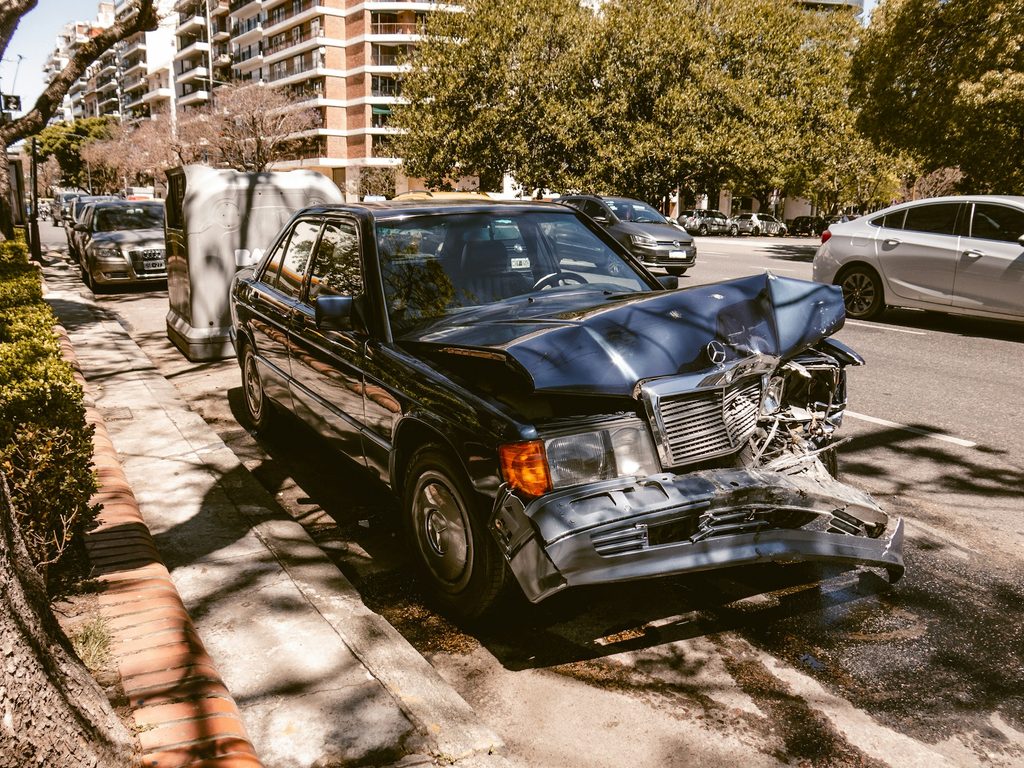
Can a Cat N marker be removed?
No. Insurers record every category on the Motor Insurance Anti-Fraud and Theft Register (MIAFTR), which history checks draw on. The ABI says those records shouldn’t be changed except to correct a genuine error, and entries for earlier incidents must be kept. Repairing the car doesn’t wipe it.
FAQs
Sources
- GOV.UK: Scrapping your vehicle and insurance write-offs: insurance write-offs (checked 31 Sept 2026)
- GOV.UK: Buying repaired ‘written off’ vehicles: a consumer guide (Checked 31 Sept 2026)
- ABI: Code of Practice for the Categorisation of Motorised Vehicle Salvage, version 12 (28 May 2025): PDF3
- What Car?: What is a Cat A, B, S or N write-off?4 (Checked 1 Nov 2026)
- GOV.UK Consumer guide: https://www.gov.uk/government/publications/buying-repaired-written-off-vehicles-a-consumer-guide/buying-repaired-written-off-vehicles-a-consumer-guide ↩︎
- GOV,UK : https://www.gov.uk/scrapped-and-written-off-vehicles/insurance-writeoffs ↩︎
- Code of Practice for the Categorisation of
Motorised Vehicle Salvage:
https://keystone-cms-production-amfyhhecavg8gneq.northeurope-01.azurewebsites.net/blob/keystoneproduction/publicFile/2026/01/code-practice-categorisation-motorised-vehicle-salvage-may2025-cmkdwbso4000dmho27coi4aly.pdf ↩︎ - What Car?:what is Cat A, Cat B, Cat S and Cat N?https://www.whatcar.com/advice/buying/what-is-a-cat-a-cat-b-cat-s-or-cat-n-write-off/n1103 ↩︎




6 Comments